
Best Kitchen Appliances Worth Buying (and What to Skip)
I’ve watched people fill their kitchen counters with gadgets they used twice. A friend of mine owns a waffle maker, a juicer, a bread machine, and a sandwich press. Last I checked, all four were in a cupboard behind the pressure cooker she uses every day.
The truth about kitchen appliances is simple: a few earn their place daily, and the rest are clutter. This guide covers which is which, so you spend money where it counts.
Quick Answer: Which Kitchen Appliances Do You Really Need?
Most households are well served by six core kitchen appliances: a refrigerator, a microwave or induction cooktop, a mixer grinder or blender, a pressure cooker, an electric kettle, and a toaster or air fryer. Everything else depends on how you cook, how many people you feed, and how much counter space you have.
The Essentials
1. Refrigerator
This is the one appliance that runs 24 hours a day, so it’s worth getting right. Look at capacity first. A rough rule is about 50 to 60 liters per person, plus extra if you buy groceries in bulk. Then check the energy rating. A more efficient model costs more upfront but saves on electricity every month for a decade or more.
Double-door models are great for families, but single-door fridges are cheaper to run and fine for one or two people. Whichever you pick, buy from a brand with decent local service. A fridge breakdown with no technician available is a miserable week.
2. Microwave Oven or Induction Cooktop
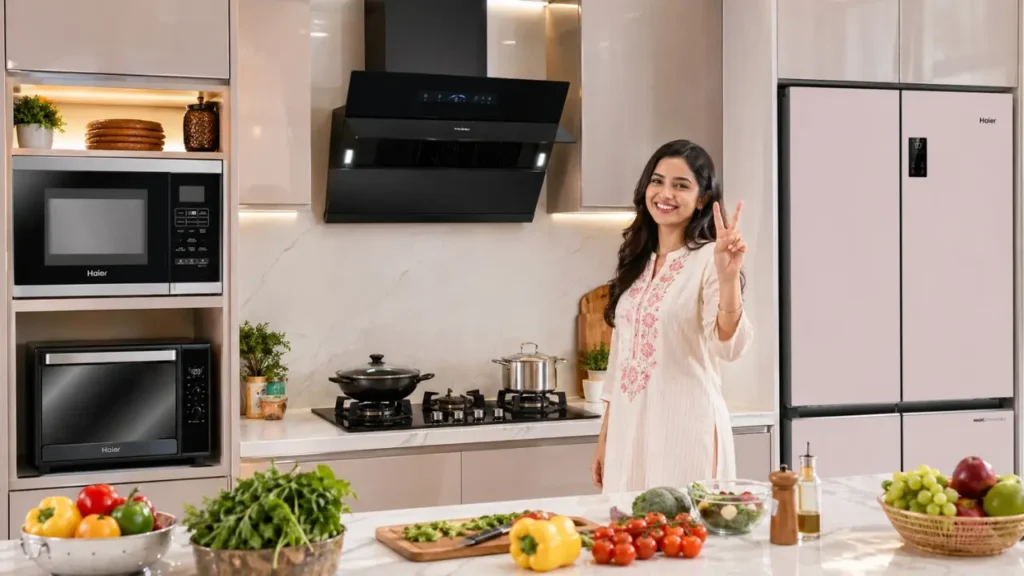
A microwave reheats leftovers, melts butter, and steams vegetables in minutes. A convection microwave adds baking and grilling, which makes it more useful if you like to experiment. A solo microwave is plenty if you mostly reheat.
An induction cooktop is a strong second stove. It heats quickly, wastes little energy, and keeps the kitchen cooler. The catch is that you need induction-friendly cookware with a flat, magnetic base.
3. Mixer Grinder or Blender
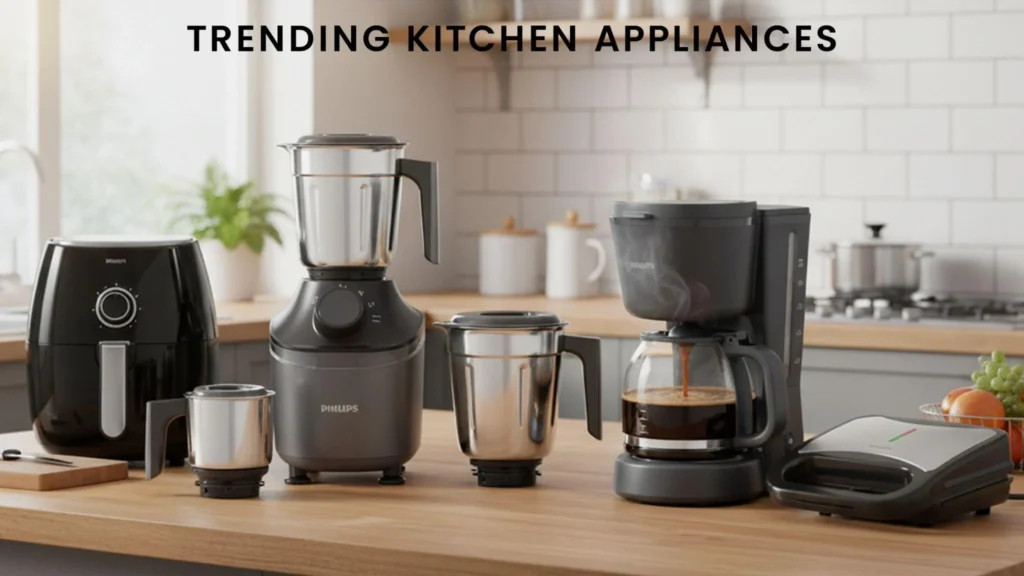
If you cook a lot of Indian food, a mixer grinder is non-negotiable. It handles chutneys, masalas, batters, and smoothies. Look for a motor of at least 500 to 750 watts, sturdy stainless steel jars, and a good warranty on the motor. Cheap blades dull fast, so check that the jars feel solid in your hand.
4. Pressure Cooker
Few appliances save as much time. Dal, rice, and stews take a fraction of the usual cooking time. A traditional stovetop cooker is cheap and reliable. An electric multi-cooker costs more but lets you walk away, which is handy on busy evenings.
5. Electric Kettle
It sounds boring, and it is, but it boils water faster than a stove and shuts itself off. Pick stainless steel over plastic, and get a model with auto cut-off. You’ll use it for tea, instant noodles, and oatmeal every single day.
6. Air Fryer
I was skeptical at first. It’s basically a small, fast convection oven, but it makes crisp food with very little oil, and it reheats pizza and fries better than a microwave. It earns its counter space if you cook for one to four people. For a big family, the small basket becomes a bottleneck.
Nice-to-Have Kitchen Appliances
These are worth it only if they match your habits:
- Stand mixer: brilliant for regular bakers, overkill for the rest of us.
- Food processor: saves serious chopping time if you cook from scratch most days.
- Dishwasher: a genuine quality-of-life upgrade, especially for families.
- Coffee machine: worthwhile if you drink several cups a day, since it pays for itself against café visits.
- Rice cooker: useful if rice is a daily staple, though a pressure cooker can do the job.
Kitchen Appliances You Can Probably Skip
Be honest with yourself before buying these:
- Juicers: messy to clean, so they often end up unused.
- Sandwich makers and waffle makers: fun for a month, then forgotten.
- Bread machines: most people return to buying bread or baking by hand.
- Ice cream makers: a great idea that rarely survives past summer.
A good test: if you can’t name three meals you’d make with it this week, wait.
How to Choose the Right Kitchen Appliances
Measure your space. Counter and cabinet room runs out faster than you expect. Measure before you buy, including door-swing clearance for fridges.
Check the energy rating. In India, look for the BEE star label. More stars means lower bills over time.
Read the warranty properly. A long warranty on paper means little if service centers are far away. Check reviews specifically about after-sales support.
Prioritize ease of cleaning. An appliance you dread washing is an appliance you stop using. Dishwasher-safe parts and few crevices are real advantages.
Buy for your actual cooking. Don’t buy for the person you imagine becoming. If you don’t bake now, you probably won’t after buying an oven.
Simple Maintenance Tips
Small habits stretch the life of your kitchen appliances considerably. Descale your kettle monthly if your water is hard; a splash of vinegar and water does the job. Clean the microwave with a bowl of steaming water and lemon to loosen grime. Defrost older fridges regularly and keep the coils dust-free. Don’t overload your mixer jar, and let the motor rest between heavy grinds.
Frequently Asked Questions
What are the most important kitchen appliances for a small kitchen?
A refrigerator, a microwave or induction cooktop, a mixer grinder, and an electric kettle cover most needs without eating up space.
Is an air fryer worth buying?
Yes, if you cook for a small household and like crispy food with less oil. It’s less useful for large families because of its limited capacity.
How long do kitchen appliances usually last?
Refrigerators often run 10 to 15 years, microwaves around 8 to 10, and small appliances like blenders and kettles typically 3 to 7, depending on use and care.
Are expensive kitchen appliances worth it?
Sometimes. Pay more for appliances you use daily, like your fridge and mixer. Save money on gadgets you’ll use occasionally.
Which kitchen appliances saves the most time?
For most people, a pressure cooker, followed closely by a dishwasher and an air fryer.
Final Thoughts
The best kitchen isn’t the one with the most gadgets. It’s the one where every kitchen appliances has a job and gets used. Start with the essentials, live with them for a few months, and add something new only when you notice a real gap in how you cook.